
For any business relying on accounting software to manage finances, payroll, and reporting, encountering data corruption can feel like a nightmare. If you've been dealing with file errors, missing transactions, or a database that simply won't open, you're not alone. Sage Data Corruption Repair is one of the most common issues businesses face — and getting expert help at +1(844)341-4437 can save you hours of frustration and potential data loss. Whether you're a small business owner or an accountant managing multiple clients, understanding how to approach this problem is essential to keeping your operations running smoothly.
What Is Sage Data Corruption and Why Does It Happen?
Data corruption in accounting software doesn't always announce itself dramatically. Sometimes it creeps in quietly — a transaction that won't save, a report that throws an error, or a company file that takes forever to load. Other times, it hits hard: a complete inability to open your database, missing records, or scrambled figures that throw off your entire balance sheet.
Understanding the root causes of data corruption helps you both fix the current problem and prevent future occurrences. Here are the most common culprits:
1. Improper Shutdowns Power outages, forced restarts, or simply closing the software incorrectly while a transaction is being processed can leave your database in an incomplete state. When the software tries to reconcile that incomplete write operation next time it opens, corruption can result.
2. Network Issues For businesses running their accounting software in a multi-user environment over a local area network, unstable connections are a significant risk. If the connection drops mid-transaction, the file can be left in a corrupted state.
3. Hardware Failures A failing hard drive, bad sectors on a disk, or RAM issues can all lead to corrupted data files. If your machine has been showing signs of hardware trouble, your accounting database may have already been affected.
4. Software Conflicts Third-party programs — particularly antivirus software — sometimes flag accounting database files and quarantine or modify them. This can cause immediate corruption or gradual degradation over time.
5. Oversized Company Files As your business grows, so does your data file. Very large files are more susceptible to corruption, especially if your hardware or network infrastructure isn't equipped to handle the load.
Recognizing the Signs of a Corrupted Database
Before you can fix the problem, you need to confirm that you're dealing with data corruption. Here are the most telling symptoms:
- The software displays error messages when opening the company file
- Transactions appear duplicated or are completely missing
- Reports generate incorrect totals or fail to load altogether
- The program crashes frequently or freezes mid-task
- The database takes an unusually long time to open or respond
- Error codes referencing the database appear during normal operations
If you're experiencing one or more of these issues, it's time to take action. Waiting too long can make recovery significantly harder.
Using the Sage 50 Database Repair Utility
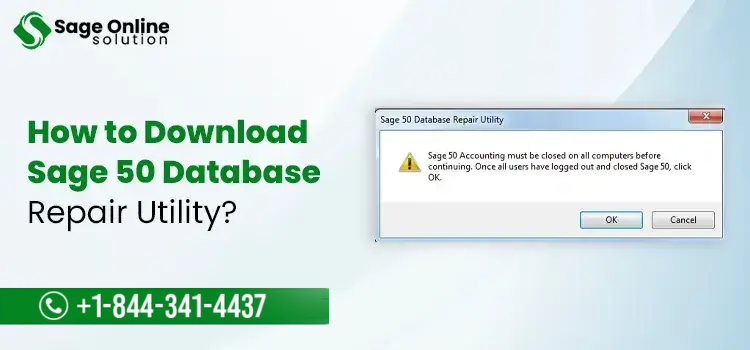
One of the first tools you should turn to is the built-in repair feature. Using the Sage 50 database repair utility is often the quickest first step for addressing minor corruption issues without needing outside help.
Here's a general guide on how to use it:
Step 1: Back Up Your Data First Before attempting any repair, always create a backup of your current company file — even if it's corrupted. This preserves a restore point in case the repair process causes further issues.
Step 2: Close All Instances of the Software Make sure no other users are logged into the company file. In a multi-user environment, ensure all workstations have closed the application before proceeding.
Step 3: Access the Repair Utility Navigate to the File menu and look for the maintenance or database repair options. Depending on your version, this may be listed under "Maintain" or accessed through a separate utility tool installed alongside the main application.
Step 4: Run the Repair Scan Allow the utility to scan the database file fully. This process may take several minutes depending on the size of your file. Do not interrupt it once it has begun.
Step 5: Review the Results Once complete, the utility will report on what was found and what was fixed. In many cases of minor corruption, this is all you need. However, more severe issues may require additional steps or professional assistance.
When the Built-In Tool Isn't Enough: Sage 50 Data Repair Options
For moderate to severe corruption, the built-in utility may not be sufficient. This is where more advanced sage 50 data repair techniques come into play.
Restoring From a Backup
If you maintain regular backups — and this is a practice every business should follow — restoring from the most recent clean backup is often the fastest solution. The key is to identify exactly when the corruption occurred so you restore to a point before it happened.
Manual Data Recovery
In situations where backups are unavailable or outdated, manual recovery may be necessary. This involves working through the database to identify and isolate corrupted records, a process that requires both technical knowledge and familiarity with how accounting data is structured.
Third-Party Recovery Tools
Several specialized tools exist for sage data repair that go beyond what the native utility can handle. These applications are designed to parse database files at a deeper level, recovering records that the built-in tool might miss.
Professional Support
Sometimes the most efficient solution is to call in expert help. If you've tried the built-in repair tool and basic troubleshooting without success, reaching out to a specialist at +1(844)341-4437 can get your data recovered with minimal disruption to your business.
Sage 50 Database Repair: A Step-by-Step Troubleshooting Approach
When facing a corrupted database, having a structured approach makes the process more manageable. Here's a recommended sage 50 database repair workflow:
Phase 1: Assess the Damage
Document every error message, symptom, and recent change to your system. When did the problem start? Was there a power outage, software update, or hardware change around that time? The more context you have, the easier it is to pinpoint the cause.
Phase 2: Isolate the Problem
Determine whether the corruption is limited to one company file or affects multiple files. Try opening a sample company file to see if the issue is file-specific or software-wide.
Phase 3: Attempt the Native Repair
Run the built-in database repair utility as described above. Document the results carefully, as this information will be useful if you need to escalate to professional support.
Phase 4: Check for Underlying System Issues
Run a disk check on your hard drive, verify that your antivirus software isn't interfering with the database files, and ensure your operating system is up to date.
Phase 5: Restore or Recover
Depending on the outcome of the above steps, either restore from a backup, use a third-party tool, or contact a data recovery specialist.
Preventing Future Data Corruption
Recovering from data corruption is stressful and time-consuming. The best long-term strategy is to reduce the likelihood of it happening again.
Implement a Regular Backup Schedule Automated daily backups stored both locally and in the cloud give you multiple restore points to work from. Never rely on a single backup location.
Invest in a UPS (Uninterruptible Power Supply) A UPS device protects your hardware and open files from power outages and surges, one of the leading causes of data corruption.
Keep Your Software Updated Software patches often include fixes for known bugs that can contribute to data corruption. Staying current reduces your exposure to these risks.
Monitor Your Hardware Regularly check your hard drives for signs of wear, and replace aging hardware proactively rather than waiting for a failure.
Configure Antivirus Exclusions Work with your IT team to add your accounting database file locations to your antivirus exclusion list. This prevents the software from inadvertently modifying or quarantining critical files.
Limit Multi-User Access During Critical Tasks When running large reports, end-of-year processes, or major data imports, limit the number of active users in the system to reduce the risk of network-related corruption.
When to Call a Professional
There are situations where DIY repair simply isn't the right call. If your company file contains years of financial data, if you're approaching a tax deadline, or if you've already attempted repairs without success, professional intervention is the smart move.
Experts who specialize in sage data corruption repair have access to advanced tools and techniques that aren't available through standard channels. They can often recover data that appears to be permanently lost, reconstruct damaged records, and get your system back online faster than working through the problem independently.
Don't let pride or hesitation cost your business more time and money than necessary. A quick call to +1(844)341-4437 can connect you with specialists who handle these exact situations every day.
Final Thoughts
Data corruption is a serious but manageable challenge. Whether you're dealing with a minor glitch that the native utility can resolve or a severe database failure requiring professional recovery, having a clear plan makes all the difference. Start with a backup, use the tools available to you, and don't hesitate to seek expert help when the situation demands it.
Your accounting data is the financial backbone of your business — treat its protection with the same seriousness you give to your physical assets. With the right approach to sage data corruption repair, you can recover quickly, minimize losses, and put better safeguards in place for the future.